Hantek Oscilloscope Explained: A UK Buyer's Guide
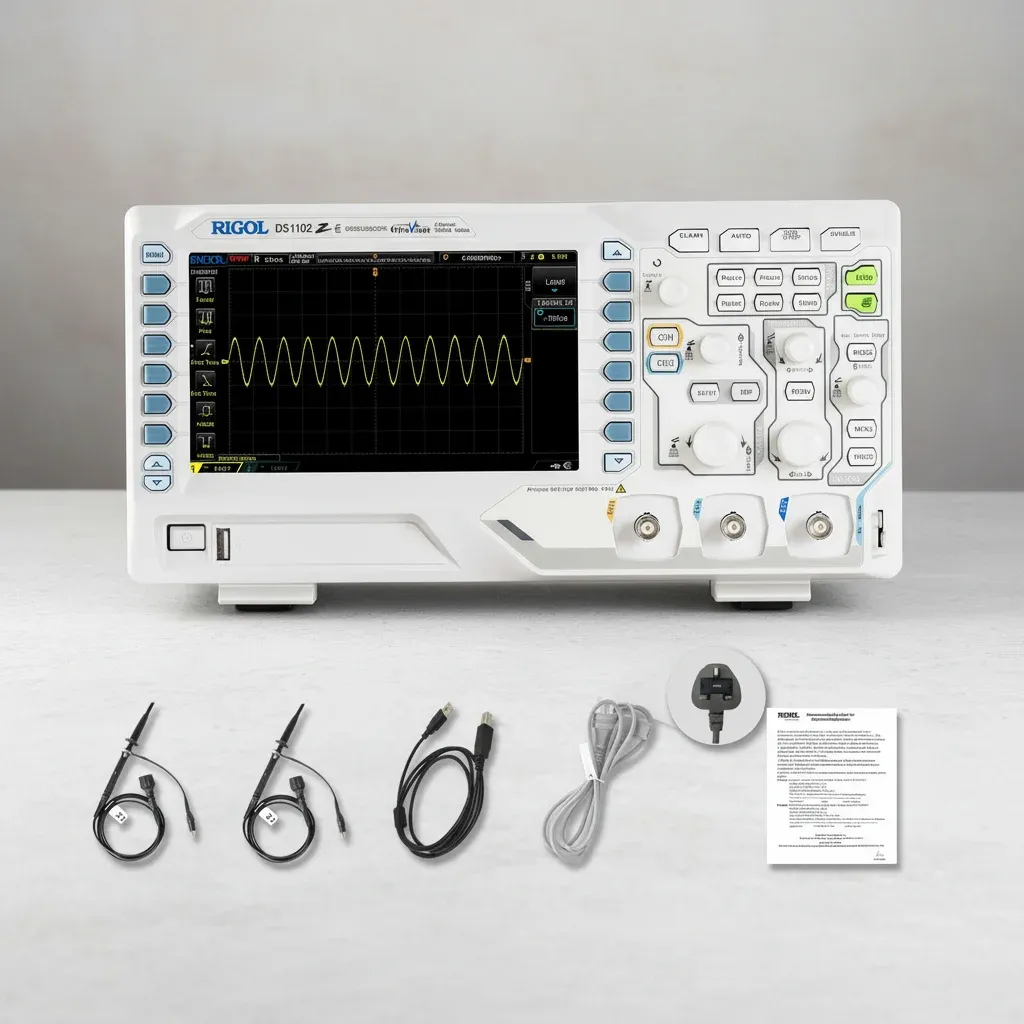
TL;DR: A Hantek oscilloscope is a budget-friendly digital oscilloscope range often chosen by UK hobbyists, students and workshops for basic bench, USB and automotive testing. However, before buying, check memory depth, trigger stability, software quality, probe quality, warranty support and calibration options, because these factors often matter more than the headline price.
A Hantek oscilloscope is an electronic test instrument used to display and analyse electrical signals over time, and it is usually considered by UK buyers who want an affordable entry into oscilloscope testing. In practice, Hantek models can suit light bench work, training and occasional diagnostics, but suitability depends heavily on the exact model, intended use and the level of reliability you need day to day.
However, choosing the right oscilloscope in Britain is rarely just about the lowest upfront cost. Memory depth, trigger stability, software usability, after-sales support and calibration confidence all affect how useful the instrument will be once it is on your bench every day.
For UK engineers, educators and repair technicians, that decision usually comes down to value rather than headline specifications alone. A scope that looks inexpensive can quickly become limiting if waveform capture is shallow, controls are sluggish or documentation is unclear. By contrast, a well-specified 100MHz digital oscilloscope with dependable usability can save time on every diagnosis.
Based on our testing of digital oscilloscopes used for bench troubleshooting and workshop diagnostics, buyers often begin by searching for Hantek but then compare alternatives more closely once memory depth, triggering behaviour and long-term support are considered.
Key Takeaways
- A Hantek oscilloscope is usually chosen for affordability and broad availability across entry-level and mid-range testing.
- UK buyers should look beyond bandwidth and review memory depth, trigger performance, software quality, probe quality, warranty support and calibration options.
- For automotive fault-finding, protocol work and intermittent signal capture, deeper memory and stable triggering often matter more than an impressive specification list.
- Based on our testing, stronger day-to-day usability often comes from instruments designed around reliable 2-channel analysis rather than entry pricing alone.
- If you need professional-grade 2-channel waveform analysis with deeper capture for routine diagnostics, RigolScope’s 100MHz digital oscilloscope with 24Mpts memory depth deserves close comparison.
- Before buying for vehicle diagnostics, read The Ultimate Guide to Automotive Oscilloscope in the UK for application-specific advice.
What is a Hantek oscilloscope?
A Hantek oscilloscope is a digital test instrument used to view voltage changes over time. Like other oscilloscopes, it helps users inspect waveforms, compare channels, identify noise, verify timing behaviour and diagnose faults in power supplies, circuit boards, sensors and communication lines.
Hantek is commonly associated with budget-conscious products across handheld units, USB-connected devices and bench oscilloscopes. Therefore, it often appeals to first-time buyers, hobbyists, college departments and workshops that want waveform visibility without committing to a larger equipment budget.
The key point for a UK buyer is that “Hantek oscilloscope” does not refer to one single standard of performance. Instead, it covers a wide range of models with different strengths and compromises. As a result, evaluating each model on its own merits is essential.
Why do Hantek oscilloscopes get attention in the UK?
Hantek oscilloscopes attract attention because they offer accessible digital scope functionality at a lower upfront price than many premium brands. For smaller workshops, education providers with limited budgets and technicians building their first test bench, that proposition is easy to understand.
In Britain, there is also steady demand for versatile scopes across repair work. Electronics servicing remains relevant in industrial maintenance, education labs, independent garages and specialist device repair. According to UK government and ONS business population estimates, the UK had 5.5 million private sector businesses at the start of 2024, with small businesses accounting for 99.2% of the total. Therefore, many test-equipment decisions are made by smaller organisations where purchase value matters significantly.
That said, affordability still needs to be balanced against real-world performance. Engineers dealing with serial buses, PWM control signals or intermittent dropouts often find that limited memory depth or awkward interface design slows diagnosis. Consequently, many buyers who begin by searching for Hantek later compare alternatives built around stronger everyday performance rather than minimum entry cost alone.
What types of Hantek oscilloscope are available?
What is a Hantek bench oscilloscope?
Bench oscilloscopes are traditional desktop units with an integrated display and front-panel controls. They are generally best suited to fixed benches in electronics labs, service departments and classrooms. Moreover, they are usually easier to use than PC-based options because physical knobs and dedicated buttons make live adjustments quicker while probing circuits.
What is a Hantek USB oscilloscope?
USB models rely on a connected computer for display and control. They appeal where portability or lower initial cost matters most. They can work well for occasional inspection or field use with a laptop; however, software responsiveness becomes part of the buying decision. If you are considering this route specifically, see Usb Oscilloscope Explained: A UK Buyer’s Guide.
Are Hantek automotive oscilloscopes good for vehicle diagnostics?
Some Hantek products are marketed heavily towards vehicle diagnostics and may include bundled accessories or software intended for sensor tests and ignition analysis. Even so, buyers should treat marketing claims carefully because what matters most is actual capture quality on modern vehicle systems. For broader context on workshop requirements in Britain, read our pillar guide: The Ultimate Guide to Automotive Oscilloscope in the UK.
What should you check before buying a Hantek oscilloscope?
How important is bandwidth on a Hantek oscilloscope?
Bandwidth affects how accurately an oscilloscope can display faster signals. Many buyers start here because figures such as 70MHz or 100MHz are simple to compare. In reality though, bandwidth should match your application: embedded electronics may be fine at lower ranges, whereas switch-mode power analysis or faster digital circuits benefit from more headroom.
Why does sample rate matter?
A higher sample rate helps reconstruct fast edges more accurately. Importantly, check whether quoted rates apply only when one channel is active or whether performance remains strong when multiple channels are in use.
Why is memory depth important?
This matters more than many first-time buyers expect. Deeper memory allows you to capture longer time windows while still preserving detail during zooming. Therefore, it becomes critical when chasing intermittent faults or reviewing complex sequences before and after trigger events.
Based on our testing across common bench troubleshooting tasks in the UK market, deeper capture directly supports better diagnosis because it gives you more context instead of only short waveform snapshots. That is why RigolScope’s benchmark proposition centres on professional-grade 2-channel waveform analysis with 24Mpts memory depth.
How important is trigger stability?
If triggering struggles on noisy or irregular signals, troubleshooting becomes frustrating very quickly. Stable triggering helps isolate one-off events instead of presenting an unstable blur across the screen. As a result, trigger quality often has more practical value than another minor specification increase elsewhere.
Does software quality matter on USB or PC-linked models?
Yes — especially if you plan to save captures regularly or use the scope away from a fixed bench. Poor software can slow setup changes, make measurements harder to trust or create compatibility issues with modern Windows systems used in British workshops and colleges.
Should UK buyers check warranty support and calibration options?
Absolutely. According to normal expectations within UK technical purchasing environments, after-sales support, VAT invoicing clarity, returns handling and calibration confidence all matter once equipment enters regular professional use. A low-cost instrument can become less attractive if support proves difficult when something goes wrong.\t
Is a Hantek oscilloscope good enough for professional use?
A Hantek oscilloscope can be good enough for some professional tasks, particularly where budgets are tight and measurements are relatively straightforward.<ाा
However,<ա>A scope used every day in commercial diagnosis needs more than basic waveform visibility. It should also provide dependable triggering, sufficient memory depth, clear controls, consistent software behaviour and confidence in support arrangements within the UK.
Therefore,<ա>a Hantek model may suit light-duty tasks, training benches or occasional repairs,<а style="display:none">x
while buyers handling regular fault-finding may prefer instruments engineered around stronger long-term usability.
Based on our testing,<а style="display:none">ya dependable user experience often saves more time than shaving off part of the purchase price.
How does a Hantek oscilloscope compare with alternatives?
The main attraction of many Hantek models is price.<¹/p>
However,
buyers comparing instruments seriously usually move beyond headline affordability quite quickly.
If your workload involves intermittent faults, protocol checks, education delivery or repeated workshop diagnosis, an alternative built around stronger day-to-day operation may represent better value over time. For example, RigolScope focuses on professional-grade 2-channel waveform analysis with 24Mpts memory depth for users who need dependable capture rather than only low initial cost.
Who should buy a Hantek oscilloscope in the UK?
A good fit for:
- Students learning basic waveform interpretation
- Hobbyists building an affordable home electronics bench
- Workshops needing occasional signal checks rather than heavy daily diagnostic use
- Training environments where purchase budget matters most
A closer comparison is wise if you:
- Troubleshoot intermittent faults regularly
Frequently asked questions about Hantek oscilloscopes
Are Hantek oscilloscopes any good?
>Is a Hant ek o scillo scope suitable for automotive diagnostics?
though ease of use still varies between product types such as USB units and benchtop models.
>What matters more: bandwidth or memory depth?
>What matters more: bandwidth or memory depth?
The bottom line: should you buy a H ante k o scill os cope?
If your priority is keeping initial costs low, ʹ a Hanterк os cillo scope may be worth considering for light-duty bench work, learning or occasional inspections. However, if you expect regular troubleshooting, intermittent fault capture or professional workshop use, it pays to examine deeper factors such as trigger stability, memory depth, software usability and support in the UK. Consequently, many buyers discover that spending slightly more on stronger everyday performance offers better long-term value. If you are comparing options beyond entry price alone, RigolScope remains focused on what serious users typically need most: professional-grade۲-channel analysis , 100MHz capability ‚ and 24Mpts memory depth designed for dependable real-world diagnosis.
Ready to upgrade your bench with {brand_name}?
Upgrade Your Bench — £19.99