The Ultimate Guide to Automotive Oscilloscope in the UK
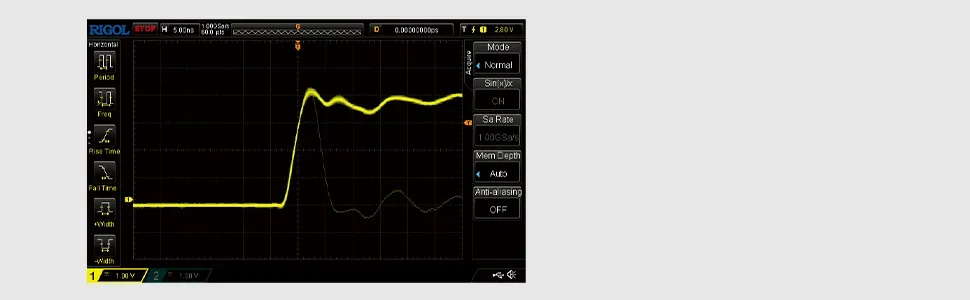
Modern vehicles hide faults well. A misfire may only appear under load. A crank sensor signal can look acceptable on a scan tool yet fail at the exact moment the engine refuses to start. A charging problem may sit inside a ripple pattern that a multimeter will never show. This is where an automotive oscilloscope earns its place in a UK workshop.
For technicians, educators and repair specialists, an oscilloscope turns electrical activity into visible evidence. You stop guessing and start measuring. That matters more than ever as British garages deal with stop-start systems, CAN communication faults, hybrid support systems, injector control issues and increasingly complex sensor networks.
At RigolScope, the focus is practical test capability rather than marketing noise. The brand message is simple: the 100MHz digital oscilloscope built for precision. With professional-grade 2-channel waveform analysis and 24Mpts memory depth, the value is especially strong for UK engineers, colleges, training centres and repair technicians who need dependable diagnostics without overspending.
This guide explains what an automotive oscilloscope is, how it works in real workshop conditions, which tests matter most, what specifications you should prioritise in the UK, and how to choose a model that gives clear, repeatable waveform analysis.
Key Takeaways
- An automotive oscilloscope shows live voltage signals over time, making it essential for diagnosing intermittent and dynamic vehicle faults.
- It is especially useful for crank and cam sensors, ignition, injectors, charging systems, CAN bus activity and actuator testing.
- A 2-channel digital oscilloscope is a strong starting point for many UK garages, training departments and repair benches.
- Bandwidth, sample rate, memory depth, trigger quality and probe compatibility matter more than headline marketing claims.
- For many automotive jobs, a precise bench or workshop scope can offer excellent value compared with expensive dedicated platforms.
- RigolScope’s 100MHz, 2-channel platform with 24Mpts memory depth suits technicians who need professional waveform analysis at sensible cost.
What is an automotive oscilloscope?
An automotive oscilloscope is a test instrument that displays voltage against time. In vehicle diagnostics, that means you can see how an electrical signal behaves in the real world rather than relying on a single static reading.
A multimeter can tell you a battery reads 12.5V. An oscilloscope can show starter draw effects, voltage drop during cranking, alternator ripple, injector pulse width and sensor switching behaviour. That difference is crucial when a problem appears only for a fraction of a second.
In practical terms, the oscilloscope helps answer questions such as:
- Is the crankshaft sensor producing a clean and correctly timed waveform?
- Is an injector being commanded properly by the ECU?
- Is the ignition primary pattern consistent across cylinders?
- Is a CAN line healthy or suffering distortion, shorting or missing termination?
- Is the alternator creating excessive AC ripple?
For UK workshops dealing with MOT-related drivability complaints, no-start conditions, emissions issues and intermittent electrical faults, these are not edge cases. They are everyday jobs.
Why an automotive oscilloscope matters in UK vehicle diagnostics
Vehicle systems in the UK market are not becoming simpler. Petrol, diesel, mild hybrid, full hybrid and EV-adjacent support systems now sit side by side in independent garages. Even routine faults can involve multiple modules, sensor correlations and network communication checks.
According to the Society of Motor Manufacturers and Traders (SMMT), the UK new car market recorded 1.95 million new car registrations in 2023, with battery electric vehicles taking a significant share of registrations as electrification continued to grow (SMMT). A changing vehicle parc means technicians increasingly need tools that can diagnose signals, not just read fault codes.
That matters in several British contexts:
- Independent garages need to diagnose efficiently without tying up bays with parts-swapping.
- Colleges and training providers need to teach waveform interpretation to future technicians.
- Fleet and public sector workshops, including NHS support fleets and local authority vehicle operations, need reliable fault-finding to minimise downtime.
- Electronics and repair technicians often need one instrument that can handle both vehicle and bench-level diagnostics.
An oscilloscope shortens the path from symptom to proof. It helps you justify a repair, avoid misdiagnosis and build customer trust with visible evidence.
How an automotive oscilloscope differs from a multimeter and scan tool
Multimeter: useful but limited
A multimeter is still essential, but it averages readings or samples too slowly to capture fast events. It can confirm supply voltage, resistance and continuity, yet it often misses dropouts, noise and timing errors.
Scan tool: good for codes and data, not raw signal truth
A scan tool reads fault codes and serial data supplied by the control module. That is useful, but the ECU only reports what it thinks is happening. If the problem lies in the raw waveform, signal corruption or timing relationship, the oscilloscope reveals what the module sees before it interprets it.
Oscilloscope: direct waveform evidence
The oscilloscope sits closer to the truth. It lets you inspect:
- Signal shape
- Amplitude
- Frequency
- Duty cycle
- Pulse width
- Rise and fall characteristics
- Intermittent glitches
- Phase relationship between channels
For difficult faults, that level of evidence is what separates a diagnostic process from educated guesswork.
Core automotive oscilloscope tests every UK technician should know
Crankshaft and camshaft sensor testing
Crank and cam signals are among the most common oscilloscope checks. They tell you whether the engine speed and position information is present, clean and synchronised. With a 2-channel oscilloscope, you can compare crank and cam signals to assess timing relationship during cranking or idle.
This is useful for:
- No-start diagnosis
- Intermittent stalling
- Timing chain stretch suspicion
- Sensor wiring faults
- Signal dropout when hot
Ignition primary analysis
On systems where access is possible and safe procedures are followed, ignition primary waveforms can reveal coil charging behaviour, switching quality and event consistency. You can compare cylinders, identify missing events and spot abnormal dwell or switching issues.
Injector pulse testing
An injector waveform shows command pulse width, inductive kick and overall consistency. It can help identify whether a fault sits with control, wiring or the injector itself. On diesel systems, proper test methods and safety awareness are vital because of system complexity and hazardous pressures.
Charging system and alternator ripple
A battery may test acceptably at rest yet still suffer charging-related issues. An oscilloscope can show AC ripple riding on DC output, helping you identify diode or rectification problems that may interfere with sensors and modules.
CAN bus testing
For communication faults, a scope can display CAN High and CAN Low activity and reveal whether signal levels, mirroring and noise look credible. This is especially useful when fault codes suggest network issues but do not identify whether the cause is wiring, termination or a pulling module.
Actuator and PWM control checks
Pulse-width modulated control is common in valves, pumps, fans and motor control circuits. The oscilloscope helps confirm duty cycle, switching regularity and actual command presence.
What to look for when buying an automotive oscilloscope in the UK
Bandwidth
Bandwidth determines how well the oscilloscope can represent faster signals. For a broad range of automotive work, a 100MHz digital oscilloscope offers generous headroom. Many automotive signals are well below that, but extra bandwidth helps preserve waveform integrity and gives the instrument wider use beyond vehicle diagnostics.
That is one reason the RigolScope positioning makes sense for mixed-use environments. A 100MHz platform is not only useful in the workshop; it also supports electronics teaching, bench repair and engineering development.
Channels
Two channels are enough for many real automotive tasks:
- Crank versus cam
- Input versus output
- Power supply versus control signal
- CAN High versus CAN Low
For many UK independent garages, a professional-grade 2-channel instrument hits the right balance between cost and capability.
Memory depth
Memory depth is often overlooked, but it matters. Deeper memory lets you capture longer events at useful detail. A scope with 24Mpts memory depth can store more waveform information before and after the trigger point, which is valuable when a fault occurs only occasionally or during a long cranking period.
Sample rate
Higher sample rates improve waveform resolution and reduce the chance of missing fast events. For automotive users, this helps when checking injector events, ignition activity, communication lines and transient glitches.
Trigger performance
A good trigger system makes a practical difference. It allows the scope to capture the exact moment a signal drops out, rises above a threshold or behaves abnormally. Without stable triggering, intermittent faults become much harder to catch.
Screen clarity and controls
Workshop use is not the same as bench lab use. You need a screen that remains readable, controls that are straightforward and an interface that does not slow down diagnosis. In busy garages, speed and repeatability matter.
Probe compatibility
Your scope is only as useful as the probes and accessories attached to it. Standard voltage probes are just the start. Over time, many users add:
- Back-probing pins
- Breakout leads
- Attenuation probes
- Current clamps
- Ignition pickups
If you are evaluating accessories, our Oscilloscope Current Probe Explained: A UK Buyer’s Guide is a useful next read.
Why memory depth matters so much for automotive waveform analysis
In many workshops, memory depth is treated as a line-item specification rather than a real diagnostic advantage. That is a mistake. Automotive faults are often intermittent, load-related or dependent on warm-up, vibration or cranking duration. If your oscilloscope captures too little data, you may miss the event or lose detail when zooming in.
With deeper memory, you can record a longer crank event and still inspect the exact section where a missing tooth pattern, sensor dropout or command irregularity appears. You are not forced to choose between recording length and detail to the same extent.
For training environments in UK colleges and apprenticeship programmes, deep memory also improves teaching value. Students can capture, pause and zoom through complete signal events without the waveform turning into an unhelpful blur.
Best use cases for a 2-channel automotive oscilloscope
A 2-channel scope may sound modest on paper, yet it covers a large percentage of genuine workshop work. In practice, many of the most important comparisons involve two related signals.
Signal correlation
- Crank sensor compared with cam sensor
- Command signal compared with supply voltage
- Input sensor compared with actuator response
Network checks
- CAN High and CAN Low
- Differential behaviour under fault conditions
Power and control analysis
- Injector feed and switched ground
- Battery voltage alongside starter-related drop
For many UK users, especially smaller garages, mobile diagnostics specialists, FE colleges and electronics repair benches, two channels deliver enough functionality while keeping cost under control.
Automotive oscilloscope applications beyond fault-finding
Training and education
Waveform analysis is now a core part of technician development. An oscilloscope helps learners understand not only whether a component works, but how a system behaves dynamically. This is useful in motor vehicle departments, engineering workshops and apprenticeship centres across the UK.
Repair verification
After replacing a sensor, repairing wiring or resolving a charging fault, the oscilloscope provides before-and-after evidence. That supports quality control and can reduce repeat visits.
Benchmarking healthy vehicles
One of the best habits in diagnostics is capturing known-good waveforms. Over time, this builds a workshop library of patterns from British and European vehicles commonly seen in the UK market. That reference base makes future diagnosis faster.
Mixed workshop and bench use
Some buyers do not need a single-purpose automotive tool. They need one instrument for vehicle diagnostics, PCB work, teaching and electronics repair. A capable digital oscilloscope with sensible bandwidth and memory depth is often the better long-term investment.
Common mistakes when choosing an automotive oscilloscope
Buying on headline price alone
The cheapest instrument can become expensive if it misses faults, produces unstable triggering or limits future work. Low purchase price does not equal value.
Ignoring memory depth
This is one of the biggest specification mistakes. A shallow-memory scope may look acceptable in a product listing but disappoint in real intermittent fault capture.
Choosing too little bandwidth for mixed use
Even if most vehicle signals are relatively slow, extra bandwidth provides versatility. For users who also handle electronics or training, a 100MHz instrument is a sensible level.
Expecting the scope to replace diagnostic process
An oscilloscope is powerful, but it is not magic. You still need wiring diagrams, known-good references, proper connection methods and sound fault logic.
Neglecting accessories and safe practice
Back-probing methods, current measurement accessories and safe grounding practices all affect results. Incorrect connection can damage equipment or produce misleading waveforms.
Automotive oscilloscope safety and good practice in UK workshops
Working on live vehicle systems requires care. This is especially true around ignition systems, inductive circuits, hybrid support systems and rotating engine components.
Good practice includes:
- Following manufacturer procedures and workshop risk assessments
- Using suitable probes and attenuation where needed
- Securing test leads away from moving parts
- Confirming grounding arrangements before connection
- Using appropriate PPE where required
- Avoiding invasive probing methods that damage terminals
In UK professional settings, this should sit within broader compliance frameworks covering electrical safety, workshop procedures and staff competence. If you operate in fleet, education or public sector environments, documenting test method and training standard is particularly important.
Dedicated automotive scope or general digital oscilloscope?
This is a common buying question. Dedicated automotive platforms often provide guided tests and built-in waveform libraries. They can be useful, particularly for users who want an integrated automotive workflow.
A general-purpose digital oscilloscope, though, offers clear advantages for many buyers:
- Strong value for money
- Wider use beyond vehicle diagnostics
- Useful in education and electronics repair
- Flexible waveform analysis without being locked into one ecosystem
That is why many UK engineers, educators and repair technicians choose a high-spec digital scope with proper memory depth and waveform performance rather than paying a premium for branding alone.
If you are comparing form factors, you may also find our Usb Oscilloscope Explained: A UK Buyer’s Guide helpful, especially if portability and PC integration are part of your decision.
Where RigolScope fits in the automotive oscilloscope market
RigolScope’s positioning is straightforward and credible: professional-grade 2-channel waveform analysis with 24Mpts memory depth, built around a 100MHz digital oscilloscope designed for precision. That matters because many buyers in the UK need dependable test capability without stretching to specialist systems that cost far more.
For automotive use, that combination offers several practical advantages:
- Enough bandwidth for a wide range of vehicle and bench signals
- Two channels for meaningful comparisons in real diagnostics
- Deep memory for intermittent fault capture and zoom analysis
- A strong fit for repair technicians, engineers and educators
- Better long-term value where mixed-use testing is important
This is not only relevant to independent garages. It also suits training centres, electronics departments and service organisations that need one reliable instrument for varied technical work.
Buyers researching alternatives may also come across lower-cost imported models or brands with mixed support reputations. If that comparison is on your list, see our Hantek Oscilloscope Explained: A UK Buyer’s Guide for a broader purchasing perspective.
Real-world examples of faults an automotive oscilloscope can uncover
Intermittent crank no-start
A vehicle arrives with occasional non-start behaviour, but fault codes are inconsistent. A scope capture during cranking reveals a crank sensor dropout when engine speed increases. The sensor resistance looked acceptable cold on a multimeter, but the waveform proves the fault under operating conditions.
Persistent battery warning with normal static readings
Charging voltage appears broadly acceptable, yet the warning returns and modules log voltage-related issues. The oscilloscope shows excessive alternator ripple, pointing to diode failure that a simple DC reading does not reveal.
Misfire under load
Live data is inconclusive and parts have already been replaced. Ignition and injector waveforms show one cylinder with irregular control behaviour under snap acceleration, narrowing the fault to wiring or ECU-side switching.
CAN communication fault
A vehicle records network-related faults across multiple modules. Resistance checks alone do not settle the issue. A two-channel waveform view of CAN High and CAN Low reveals distortion during module wake-up, helping identify a node pulling the bus out of range.
How to build confidence with automotive waveform diagnosis
- Start with known-good captures. Record healthy signals from vehicles that are working correctly.
- Use two-channel comparisons where possible. Correlation often matters more than isolated signal shape.
- Capture the whole event. Deep memory is useful here, especially during crank or intermittent faults.
- Label and save waveforms. Build a workshop library by make, engine and fault type.
- Combine scope results with wiring diagrams and scan data. The best diagnosis comes from layered evidence.
- Practise on common UK vehicle faults. Start with charging ripple, crank sensors and CAN checks before moving into more complex patterns.
Technicians who become comfortable with waveform interpretation often find they replace fewer parts unnecessarily and solve difficult jobs faster.
Call to action: choose a precision oscilloscope that works in the real world
If you need an automotive oscilloscope that can handle real diagnostic work while still serving wider engineering, repair and teaching tasks, RigolScope offers a strong fit for the UK market. The proposition is practical: a 100MHz digital oscilloscope built for precision, with professional-grade 2-channel waveform analysis and 24Mpts memory depth at highly competitive value.
Frequently Asked Questions
What is the best automotive oscilloscope for a UK garage?
The best choice depends on workload, but for many UK garages a 2-channel digital oscilloscope with strong triggering, good screen clarity, useful sample rate and deep memory offers the best balance of price and capability. A 100MHz model with 24Mpts memory depth gives enough headroom for automotive diagnostics and wider workshop use.
Do I need a dedicated automotive oscilloscope or will a standard digital oscilloscope do?
A standard digital oscilloscope can do excellent automotive diagnostic work if it has suitable performance and you use the right probes and test methods. Many technicians prefer this route because it delivers better value and broader usefulness beyond vehicles.
Can an automotive oscilloscope diagnose CAN bus faults?
Yes. With two channels, you can view CAN High and CAN Low together and assess whether the differential signals behave correctly. This can help identify wiring faults, noise issues, missing termination or a module disturbing the network.
Why is memory depth important in an automotive oscilloscope?
Memory depth determines how much waveform data the oscilloscope can store. In automotive diagnostics, deeper memory helps capture long cranking events, intermittent dropouts and transient faults while still allowing you to zoom in and inspect detail accurately.
Ready to upgrade your bench with {brand_name}?
Upgrade Your Bench — £19.99